Support the Arts
We rely on the generosity of our members and donors to keep our gallery accessible to all. Become a member today and enjoy exclusive benefits.
We rely on the generosity of our members and donors to keep our gallery accessible to all. Become a member today and enjoy exclusive benefits.

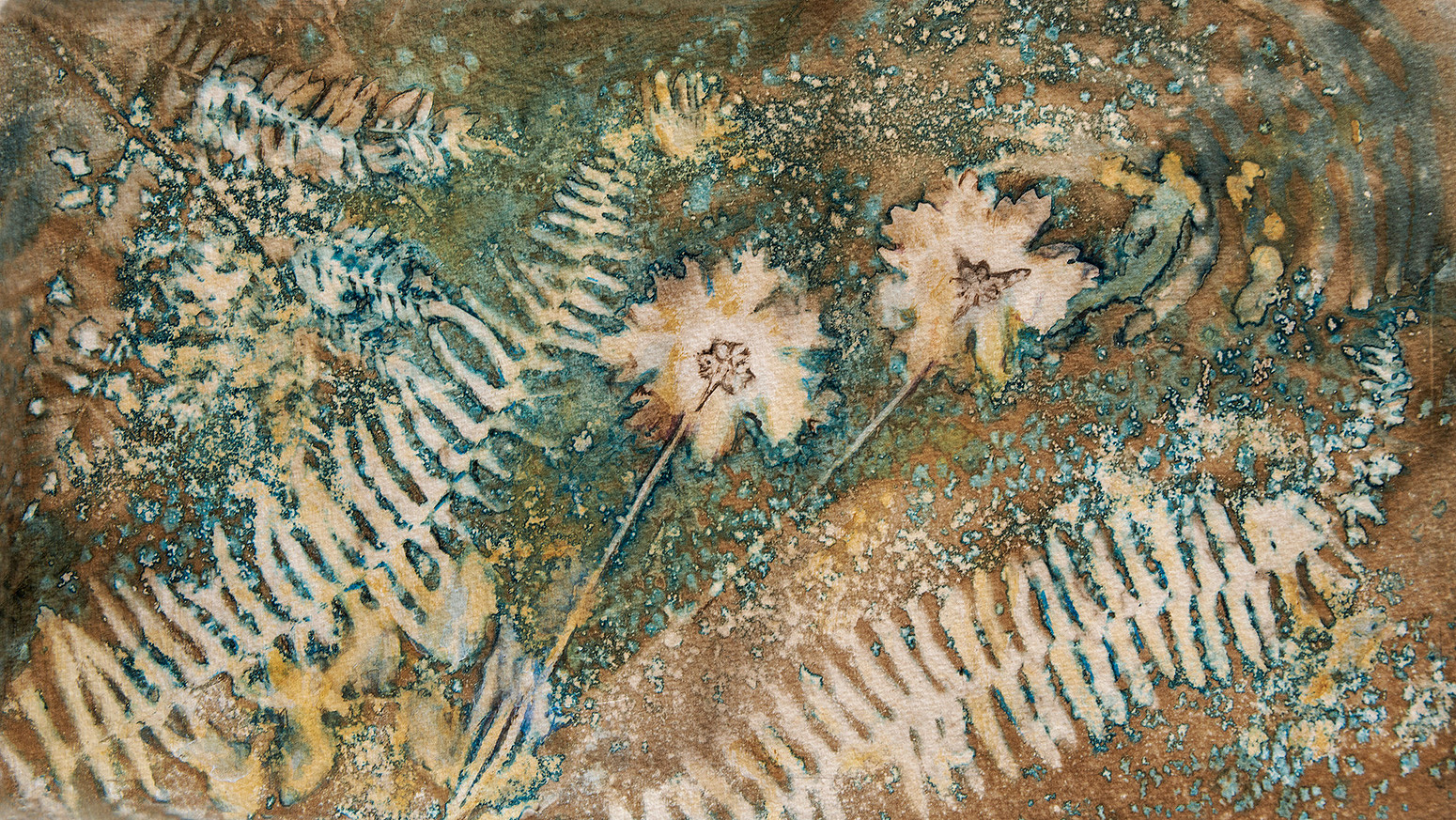
3. Arlook One, One Thousand — Debe Arlook
Curious about a piece? Click any artwork image to learn more
Christina McFaul was raised on a lake nestled in the Santa Monica Mountains of California. Her early, unmediated relationship with the wild shaped her way of seeing, instilling a deep reverence for the living world and a quiet, unwavering devotion to its protection.
Her recent body of work, Sanctuary in the Wild, reflects this intersection of motherhood and the natural world. Published as a limited edition artist book of 200 by Datz Press, the series explores nature through the eyes of her children. Discovering its magic, mystery, and transformative power. Together, mother and sons are shaped by these encounters, merging with the land in moments of stillness, discovery, and deep belonging.
The book becomes more than a document; it is a journey to the inner child, a search for peace and purpose in our purest state of being. In the sanctuary of the wild, McFaul invites us to find solace and to remember that we are not apart from nature, but of it.
A Mother as Witness
This exhibition explores the intimate, powerful roles of women, as nurturers, protectors, and witnesses through the lens of motherhood and childhood. In these photographs, the act of seeing becomes a form of care, and nature becomes both setting and subject in the unfolding relationship between mother, child, and Earth.
Debe Arlook (b. 1962) is an award-winning American interdisciplinary photographic artist, author, instructor, and mentor whose work examines memory, meditation, caregiving, and perception. She holds a BA in Visual Communication with a minor in Psychology from American University and a Life Coaching certificate. Drawing on traditional and experimental techniques—including digital and analog processes, mixed media, and collage—she creates projects ranging from abstract and conceptual work to landscape and documentary photography.
Arlook's work has been exhibited at institutions including the Lishui Art Museum, Photo London, Indian Photo Festival, Lancaster Museum of Art & History, Griffin Museum of Photography, Center for Photographic Art, and Los Angeles Center of Photography. Her five-month solo exhibiiton of one, one thousand… was held at the University of Colorado Anschutz Medical Campus, and exhibited at Harvard Medical School and Boston Children's Hospital.
Awards include 21 Women Photographers: Life's Work, L.A. Photo Curator, Royal Photographic Society Shortlist, Klompching Gallery FRESH 2024 Finalist and People's Choice Award for Witness, and Photolucida Critical Mass Top 50. Her ongoing project, one, one thousand..., received a Working Assumptions Project Grant and has been recognized with honors from CENTER, LensCulture, and Focus Photo L.A.
Arlook's photographs have been featured in All About Photo, Feature Shoot, Lenscratch, Fraction Magazine, L'Oeil de la Photographie, and Rangefinder. Her work is published in photography books including Memory Orchards: Photographers and their Families, california love - a visual mixtape, Perceive Me, and Emptiness Defined. She is co-author of Both Sides of the Table: Photography Portfolio Reviews Do's & Don'ts, the first and only book dedicated to the portfolio review process.
Her background in filmmaking, psychology, and life coaching informs a mindful, structured methodology that helps photographers clarify their vision, strengthen their portfolios, and articulate the deeper motivations behind their work.
Arlook teaches at the Los Angeles Center of Photography, Colorado Photographic Arts Center, and John C. Campbell Folk School. She has presented to the Society for Photographic Education and reviewed portfolios for CENTER Santa Fe and Brigham Young University. She is a Pasadena Photography Arts Advisor, juror, and served as contributing editor to PhotoBook Journal for 6 years. In 2016, she founded Arlook Printing Services, providing project consultation and archival printing for fine art photographers.
She divides her time between Los Angeles and Colorado.
“one, one thousand…” is a different kind of love story and one of countless untold family caregiver narratives. This unconventional photo-based documentary offers a glimpse into the challenges of lifelong care experienced by my sister, a solo parent, and my 32-year-old, non-verbal nephew. David is diagnosed with severe autism and a rare, incurable, difficult-to-control form of epilepsy known as Lennox-Gastaut Syndrome. Through this collaboration, we give voice to David and serve as witnesses to their behind-closed-doors experiences, using traditional photography, multiple photo-based techniques, and Lori’s handwritten text. The title references counting seizure duration to determine whether immediate medical attention is needed.
Michele Zousmer is a humanitarian photographer whose work documents people and communities rendered invisible by economic systems, social hierarchies, and cultural narratives. She exemplifies the transformative power of this medium as she immortalizes fleeting instances of grace and beauty that persist even amid life’s most significant challenges. Through her lens, she becomes a storyteller, an advocate, and a conduit for change, inviting viewers to journey into the worlds she captures. In doing so, she illuminates the threads that weave us all together, emphasizing that while our appearances differ, our internal experiences unite us all.
Zousmer’s images are notable for their emotional resonance: she listens deeply, forms bonds with her subjects, and brings out their inner selves, with empathy, respect, and humanity. She feels strongly about dispelling prejudice and has dedicated her career to investigating marginalized groups and the ways they cope in difficult times.
Zousmer works in long form, returning to subjects over time to build trust and depth. Her photography is not sentimental, but focuses on clarity, presence, and lived reality. She is particularly drawn to how responsibility, caregiving, and resilience are absorbed into the lives of women and girls across cultures and generations.
Her recent projects include uprooting the entrenched biases against Irish Traveller girls and women. Exploited socially and politically, she uses their words with her images and expresses dignity and humanity; she documents girls working in Costa Rica’s coffee fields while simultaneously caring for younger siblings – emotional and physical labor; and tells the stories of aging women living alone in Balkan countries - without social networks their resilience is admirable as their visibility and lives diminish. In parallel, Zousmer is developing an extensive portrait and narrative project chronicling Black professionals in science, technology, engineering, arts, and mathematics, reframing them not as aspirational role models but as essential contributors whose work has already shaped society.
Zousmer’s background spans public health, human rights, and social documentation, informing a photographic approach grounded in ethics, listening, compassion, and accountability. Her images are meant to slow the viewer down, asking for sustained attention and curiosity.
Her work has been exhibited and published internationally and is currently being developed for institutional exhibition and fellowship support.
As a humanitarian photographer, I use my lens to illuminate the lives and stories of people and communities often overlooked. My work is driven by a deep commitment to truth, dignity, and the power of visual storytelling. I strive to capture moments of grace and beauty, resilience and vulnerability, offering a window into worlds that deserve to be seen and understood.
My work centers on people whose lives are shaped by societal systems that render them essentially invisible. I photograph where power in these societies is uneven and I use my lens to illuminate the lives and stories of people where endurance is normalized—often at the expense of childhood, aging, or dignity.
I am drawn to communities that exist on the margins of public attention: women overworked and underpaid, girls pressed into adult roles, and elders whose value is measured only by their resilience. These are not moments of spectacle. They are quiet, ongoing conditions that rarely make headlines yet define entire lives.
I work slowly and with intention. Relationships and trust matter more to me than access or speed. I return when possible. I listen. My photographs are grounded in observation rather than intervention, resisting the urge to dramatize suffering or extract emotion. I am not interested in pity. I would like to know more.
Much of my recent work focuses on women in different parts of the world. In Ireland, how care, endurance, and sacrifice are absorbed into women's lives so entirely that they endure hardships in a marginalized society. In coffee-growing regions, I have documented girls who harvest crops while simultaneously caring for younger siblings, taking on both emotional responsibility and physical labor. In aging communities, I photograph women whose resilience is praised while their isolation is ignored.
Across these projects, the pattern is consistent: strength is expected, support is absent.
Photography has an ethical obligation to slow the viewer down. My images ask for sustained looking and curiosity. I use natural light and direct presence, avoiding aesthetic excess that distracts from the lived reality of my subjects. The work is meant to sit with the viewer, not comfort them.
Ultimately, my practice is about visibility—not as exposure, but as recognition. I want the viewer to confront lives that are usually overlooked and to understand that these conditions are not accidental or cultural inevitabilities. They are the result of economic systems, social expectations, and global patterns that demand giving while denying protection.
I aim to challenge perceptions, evoke empathy, and inspire action. Each image is a testament to the human spirit—an invitation to witness, reflect, and engage. Whether documenting the struggles of the marginalized or celebrating their triumphs, my work bridges lives and perspectives, fostering a deeper connection between us all. My photographs do not offer solutions. They insist on acknowledgment.


