Support the Arts
We rely on the generosity of our members and donors to keep our gallery accessible to all. Become a member today and enjoy exclusive benefits.
We rely on the generosity of our members and donors to keep our gallery accessible to all. Become a member today and enjoy exclusive benefits.
July 12, 2025 — August 2, 2025

Untitled (Imperial Sand Dunes, CA) — Stefan Frutiger
Water Stories is a group photography exhibition featuring three artists exploring humanity's relationship with water. Each artist shares their stories of water—how we use, abuse, and try to control this precious gift.
Curious about a piece? Click any artwork image to learn more
William Bay was born in Yokosuka, Japan, to parents from Eastern Oregon who were stationed overseas, and moved to Imperial Beach, California, at the age of two. Growing up in this border town during the 1980s and '90s, he developed a deep appreciation for the cultural interplay between the U.S. and Mexico—frequently crossing the border to skate, surf, and explore the vibrant nightlife and landscapes of Baja.
His journey into photography began as a freshman at Mar Vista High School, where a black-and-white darkroom class sparked a lifelong passion for the medium. Influenced by masters like Ansel Adams, Edward Weston, Sebastião Salgado, and Jock Sturges, Bay's work remains rooted in black and white, though he occasionally embraces color for select projects. Today, his photography focuses on border and environmental issues, as well as life in Baja California, capturing both the challenges and quiet beauty of the region.
Parts Per Million is a photographic exploration of the severe pollution in the Tijuana River, where untreated sewage from Mexico flows freely into the Pacific Ocean. Photographer William Bay, who grew up surfing in Imperial Beach during the 1990s, often risked illness just by entering the water—ear infections, hepatitis, and gastrointestinal sickness were common among locals. Influenced by the punk rock energy of that era and its fierce resistance to environmental destruction, Bay uses this project to confront the lasting impact of political inaction, cross-border neglect, and corporate exploitation in the wake of NAFTA.
All photographs were taken at the mouth of the Tijuana River, where the tide blurs the line between river and ocean, creating striking patterns, textures, and forms. But beneath the surface beauty lies a toxic reality: each image in this series represents one of 28 contaminants identified in a 2018 Border Patrol report—many at levels far exceeding EPA safety standards.
Terri Warpinski explores the complex relationship between personal, cultural, and natural histories through her lens-based, mixed-media creative practice. Her current work, Restless Earth, draws attention to her home ground in the Great Lakes Watershed and the urgent necessity for ecological recovery, restoration, and re-wilding in response to our global environmental crisis.
For over four decades, her various projects have taken her throughout the American West and Mexico, Australia, Western and Central Europe, the Middle East, and Iceland. She was distinguished as a Fulbright Senior Fellow to Israel in 2000–2001, as Professor Emerita of Art in 2016 after a 32-year career teaching at the University of Oregon, and was the Honored Educator of Society for Photographic Education in 2018. Most recently, she was awarded the Carol Crow Fellowship for Environmental Photography by the Houston Center for Photography in 2024, was a Top 50 finalist of Critical Mass and awarded a feature interview in Analog Forever, and was a finalist exhibited in the international BBA Photography Prize exhibition in Berlin, Germany.
Her extensive exhibition record includes the Pingyao International Festival of Photography in China; the U.S. Embassy in Jerusalem; Houston International Fotofest; the Center for Photography in Woodstock, New York; the University of the Arts in Philadelphia; and Camerawork in San Francisco. She was awarded a DAAD (Deutscher Akademischer Austauschdienst) Fellowship to Berlin to begin her long-term project Death|s|trip. Her limited-edition artist books (Sagebrush, 1999; Surface Tension, 2016) and collaborative broadside portfolios (, 2017 and , 2018) with Portland poet Laura Winter are in numerous public and special collections including Stanford University; The Bancroft at UC Berkeley; Beinecke Library, Yale; Book Arts Collection, Baylor University; Amherst College; and the Getty Research Institute. She is a member of the Environmental Photography Collective ().
Stefan Frutiger is an MA Photography graduate from Falmouth Flexible, based in San Diego, California. He grew up in the Swiss Alps, where majestic landscapes and mountain vistas are abundant. A self-taught photographer, Stefan attended a three-year course to delve deeper into photography and develop his own style. His early work was influenced by Swiss fine art photographer and personal tutor Reto Camenisch, as well as Swiss photographer Marco Grob, whose simplicity and clarity in portraiture Stefan admires. In 2021, Stefan joined a two-year master's program to further develop his photography and storytelling skills. The arid deserts of the American West became his preferred places for research and visual documentation, where he has covered environmental issues around water, waste management, and land contamination.
"Forgotten Waters" examines environmental injustice and water scarcity across the American Southwest. My earlier series exposes the radioactive legacy on the Navajo Nation through lenticulars and cutouts revealing disposal cells containing millions of tons of uranium waste. Contaminated groundwater forces residents to haul water from distant sources, while traditional springs remain contaminated with uranium and heavy metals.
My later series documents Colorado River over-allocation through aerial perspectives from Mexico to California's aqueducts. Drone images capture desert housing developments expanding despite diminishing resources—the river reduced to a trickle while canals divert water for agriculture. These works illuminate how drought and population growth create unsustainable water demands.
A native of northeastern Wisconsin, she once again resides in that glacially carved landscape and ancestral home of the Ho-Chunk (Hoocąk) and Menominee (Kāēyās maceqtawak) Nations along the Fox River in De Pere with her husband, David Graham.
This lens-based, research-intensive, mixed media, assemblage, and installation work is rooted in the histories and futures of our fragile ecosystem.
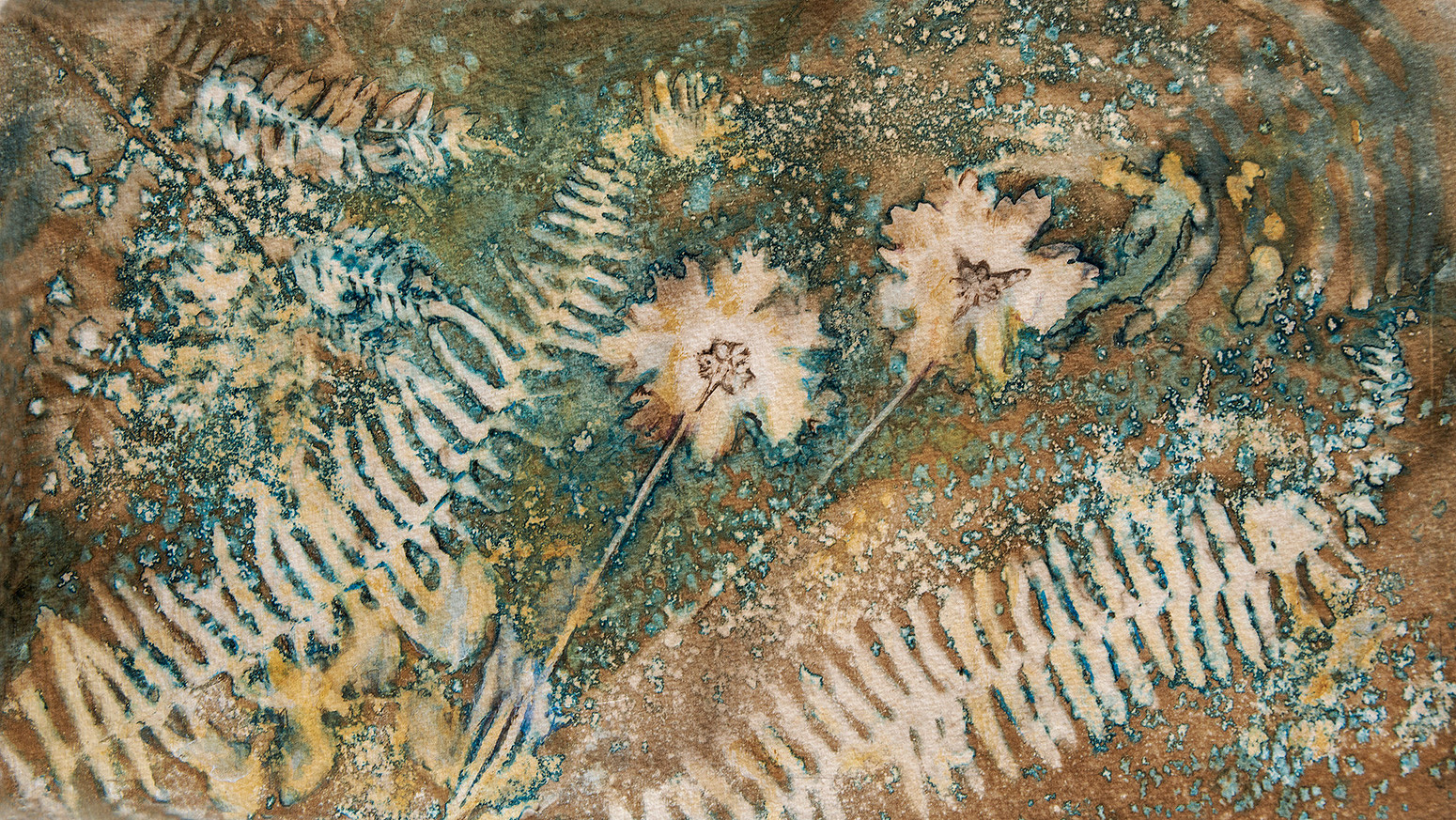
I am particularly interested in unfolding the complex and messy patterns of our species' impacts on the environment, and our ongoing renegotiation of its value to all forms of life. This project began five years ago—during the isolation and heavy travel restrictions of the pandemic—as an examination of land preserves and conservation areas that are undergoing a multi-generational process of re-wilding and ecological recovery near my home in Northeastern Wisconsin. Part manifesto and part lament, this project now extends outward along the Niagara Escarpment, probes the Great Lakes watershed and beyond, to further understand the unfathomable tragic losses our fragile planet is experiencing due to the rapid warming of the Earth.
In disrupting traditional notions of landscape photography through the use of multiple frames and fractured views, Ground/Water provides an opportunity for reflection on symbiotic relationships and systems, while the incorporation of found objects and materials forges relationships between personal, cultural, and natural histories.
The pieces that comprise Ground/Water invite the viewer to contemplate weightless immersion into places where sky, water, land, and forest crown merge into one, while others quietly confront us with reminders of our shameless abuse and overconsumption of nature's gifts. Manipulations of space and scale invite reflection on the passage of time and divergent ways of knowing place, reminding us of the magic and awe present in our local environments and encouraging engagement with and protection of our local forests. Ultimately, this project is a visual reflection of climate resilience in which communities can anticipate and manage climate impacts, minimize damage, and plan for recovery and transformation.
Through this work I seek to make visible a state of mind, a way of perceiving and connecting information and ideas across time and space that are not entirely visual in nature—and in doing so, construct a narrative that is multi-stranded and open-ended, addressing various notions related to time, observation, destruction and restoration, the accumulation of knowledge, and the shadow of memory embedded in place.


