Support the Arts
We rely on the generosity of our members and donors to keep our gallery accessible to all. Become a member today and enjoy exclusive benefits.
We rely on the generosity of our members and donors to keep our gallery accessible to all. Become a member today and enjoy exclusive benefits.
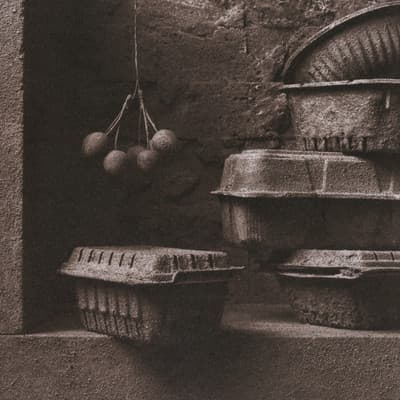

Mitch Eckert is an award-winning artist whose work has been exhibited nationally and internationally and featured in publications ranging from textbooks to journals. He holds a B.F.A. in photography and sculpture from Indiana University and an M.F.A. from Ohio University, focusing on photography and printmaking. His work is held in prestigious collections including the 21c Museum, Butler Institute of American Art, and Indianapolis Museum of Art.
With over 30 years of mastery in historic photographic processes—including kallitype, daguerreotype, and salt printing—Mitch brings deep technical knowledge and conceptual sophistication to his teaching. He is an Associate Professor of Art in Louisville, Kentucky, where his ongoing explorations in still life, botanical studies, and natural history have shaped his artistic practice for more than 25 years.
Discover the origins of photography through a hands-on historic process. Learn the salt print technique, one of photography's earliest methods, in this three-day workshop with Professor Mitch Eckert.
Step back into the 19th century and explore one of photography's earliest and most beautiful techniques in this two-day Salt Printing Workshop led by Professor of Photography Mitch Eckert. With over three decades of experience in alternative photographic processes—from daguerreotypes to kallitypes—Mitch offers a rich and thoughtful approach to historical image-making.
Participants will be introduced to the history and chemistry of the salt print, a process first perfected by William Henry Fox Talbot in the 1830s. Using modern digital negatives and hand-coated papers, students will learn how to create warm-toned, softly detailed prints that echo the aesthetic of photography's earliest days.
This workshop covers the entire process:
Preparing salt and silver nitrate solutions
Selecting appropriate papers
Contact printing techniques
Toning for archival permanence
Students will leave with a deeper understanding of the origins of photographic printing—and with 5–7 handcrafted images that beautifully bridge the past and present.
Whether you're a fine art photographer, educator, or curious explorer of analog processes, this is a rare opportunity to work slowly and deliberately, embracing the alchemy of light, chemistry, and time.
Includes paper and chemistry
What to Bring: Participants should provide their own aprons and disposable nitrile gloves
3-day course with 30-minute lunch break
For more information: donna@thephotographerseyecollective.com
Questions about this workshop?
info@pecgallery.com